⚙️ Design Smarter RF Circuits: Why Engineers Choose the SLESD2401QC ESD Diode for Peak Protection and Performance
As RF (Radio Frequency) technology pushes toward higher frequencies, denser integration, and smarter connectivity, Electrostatic Discharge (ESD) has quietly become one of the biggest threats to RF module reliability. The delicate nature of RF circuits — especially their sensitivity to transient voltages, parasitic capacitance, and EMI — makes robust protection essential.
To address these challenges, Slkor introduces the SLESD2401QC ESD protection diode, engineered for next-generation RF designs. With its ultra-low capacitance, rapid response speed, and compact package, it delivers precise, high-efficiency protection without compromising signal integrity.
In this article, we’ll explore how the SLESD2401QC is redefining reliability in RF systems — examining its technical advantages, real-world application scenarios, and the growing significance of domestic semiconductor innovation in advanced ESD protection.
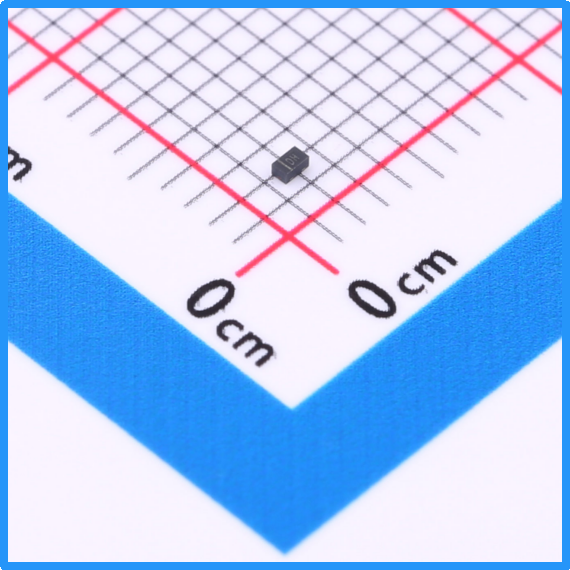
Slkor Electrostatic Discharge Diode SLESD2401QC product photo
1. ESD Protection Challenges in RF Products
RF technologies today power everything from 5G base stations and satellite communication systems to radar, Wi-Fi 6E routers, and smartphones — but as performance demands rise, so do design challenges:
- High-Frequency Signal Loss: Conventional ESD devices with junction capacitance above 50 pF can severely distort GHz-level RF signals, increasing insertion loss and degrading performance.
- Transient Voltage Threats: ESD pulses reaching thousands of volts can easily damage sensitive front-end components such as LNAs and PAs, causing permanent circuit failure.
- Compact Layout & Thermal Limits: RF modules have extremely limited PCB space, leaving minimal margin for added heat or bulky protection components.
The SLESD2401QC from Slkor overcomes these barriers with its ultra-miniature DFN1006 package (1.0 mm × 0.6 mm × 0.37 mm) and exceptionally low 13 pF junction capacitance — delivering effective ESD suppression while maintaining pristine high-frequency signal integrity and thermal stability.

Slkor Electrostatic Discharge Diode SLESD2401QC specification
2. Core Technical Advantages of the SLESD2401QC
The SLESD2401QC is purpose-built for RF protection, combining high voltage tolerance, ultra-low capacitance, and compact packaging to deliver stable, high-speed signal integrity across demanding RF environments.
Key Specifications & Performance Highlights:
- VRWM (Reverse Working Voltage): 24V — perfectly matches the DC bias range (12V–28V) of mainstream 5G NR and RF front-end modules.
- VBR min (Breakdown Voltage): 26V — ensures zero conduction under normal operating conditions, eliminating signal leakage.
- VC (Clamping Voltage): 36V — rapidly suppresses ESD surges, keeping downstream ICs safe from high-voltage transients.
- CJ (Junction Capacitance): 13pF — minimizes RF signal loss by over 70% compared to standard TVS diodes (>50pF).
- IR (Reverse Leakage Current): 1μA — delivers excellent thermal stability and ultra-low power consumption even at 85°C.
- DFN1006 Ultra-Compact Package — supports SMT reflow soldering and seamlessly integrates into high-density PCB layouts, making it ideal for next-generation miniaturized RF designs.

Parameters of Slkor Electrostatic Discharge Diode SLESD2401QC
3. Typical Application Scenarios in RF Products
1. 5G Base Station RF Front-End Protection
In 5G Massive MIMO antenna arrays, the SLESD2401QC safeguards critical components such as the LNA (Low Noise Amplifier) and PA (Power Amplifier) in each RF channel. In domestic 700MHz 5G base stations, its 13pF ultra-low capacitance keeps insertion loss below 0.2dB, while providing ±8kV contact discharge protection compliant with IEC 61000–4–2 standards — ensuring both performance integrity and reliability under harsh field conditions.
2. Satellite Communication Terminal Protection
For Ka/Ku-band satellite communication systems, the SLESD2401QC can be strategically placed between the antenna interface and RF transceiver. In portable satellite terminals, its ultra-low capacitance ensures minimal signal degradation above 20GHz, while its bidirectional protection shields against both electrostatic discharge and radiation-induced interference — delivering mission-critical reliability in high-frequency, high-altitude environments.
3. Consumer Electronics RF Interface Protection
In high-performance consumer devices such as smartphones and Wi-Fi 6E routers, the SLESD2401QC protects sensitive high-speed RF coexistence circuits including USB 3.2 and HDMI 2.1 interfaces. In 5G smartphones, its miniature DFN1006 package fits perfectly into space-constrained PCB layouts, while effectively reducing interference in the 6GHz Wi-Fi 6E band, helping manufacturers achieve optimal wireless performance and product reliability.
4. Technical Synergy and Optimization in RF Protection
1. RF Chip Matching and Voltage Alignment
The SLESD2401QC’s electrical parameters are precisely engineered to align with modern RF chip requirements. Its 24V VRWM and 26V minimum breakdown voltage (VBR) ensure seamless compatibility with GaN-based power amplifiers (PAs), where protection devices must withstand voltages above the maximum gate bias (typically 25–28V). This perfect voltage coordination prevents false triggering and signal leakage while maintaining superior protection integrity.
2. Parasitic Parameter Simulation and Layout Optimization
Advanced electromagnetic simulation tools (e.g., Ansys HFSS) are used to fine-tune the SLESD2401QC’s PCB placement within RF signal paths. By positioning the diode close to the antenna interface and minimizing trace lengths, designers can reduce parasitic inductance below 0.5nH, thereby minimizing signal reflection and insertion loss at GHz frequencies — critical for preserving signal purity in sensitive RF systems.
3. Multi-Level Protection Architecture
For ultra-high-frequency environments, the SLESD2401QC can be integrated into multi-stage ESD protection schemes alongside Gas Discharge Tubes (GDTs). In 77GHz millimeter-wave radar modules, the SLESD2401QC provides nanosecond-level ESD response, while the GDT dissipates residual surge energy. This hybrid protection design offers robust, layered defense — ensuring both instant response and sustained surge endurance.
5. Conclusion
The introduction of the SLESD2401QC represents a major milestone in the evolution of China’s RF protection technology — advancing from “functional” to “high-performance.” In the era of 5G, satellite communication, and IoT, this diode’s ultra-low capacitance, high reliability, and miniaturized design form an invisible yet indispensable safeguard for next-generation RF systems. As domestic RF chips and modules continue to mature, SLESD2401QC and its successors will further redefine global benchmarks for ESD protection, empowering China to strengthen its technological leadership in the RF industry.


Comments
Post a Comment