Empowering Smart Health Innovation: Discover the Hidden Strength of SLKOR's SLESD5Z5V0 ESD Diode
In today’s era of health-conscious living, smart wristbands, medical monitors, and home health devices are becoming indispensable — growing at over 20% annually. These intelligent tools use advanced biosensors to capture real-time data such as heart rate, blood oxygen, and body temperature, empowering users with scientific, data-driven health insights.
Yet, behind this innovation lies an unseen threat — electrostatic discharge (ESD) — capable of silently damaging precision circuits and compromising device reliability.
This article explores how the SLESD5Z5V0 electrostatic protection diode serves as an invisible guardian in smart healthcare electronics, ensuring stable performance, reliable data, and long-term protection for the technology that safeguards our well-being.
1. ESD Challenges in Smart Health Devices: Tiny Components Under High-Voltage Stress
Modern smart health devices integrate multiple sensitive components — touchscreens, bioelectrodes, wireless charging coils — all of which are directly exposed to the user and environment. When static electricity from the human body (often reaching several thousand volts from something as simple as removing a sweater in winter) comes into contact with these components, three major risks emerge:
- Sensor Accuracy Degradation: ESD strikes can cause MEMS sensors to drift, resulting in heart rate or temperature readings deviating by more than ±5%.
- Communication Disruption: Bluetooth or Wi-Fi modules may lose data packets during ESD events, leading to failed data transmission or incomplete health records.
- Component Aging or Failure: Repeated ESD exposure accelerates the degradation of capacitors, resistors, and ICs, shortening overall device lifespan.
Take, for example, a medical-grade pulse oximeter — its optical sensor is extremely voltage-sensitive. A single electrostatic discharge could cause measurement deviations exceeding 10%, directly compromising the accuracy of clinical diagnostics and patient monitoring.
Press enter or click to view image in full size

2. SLESD5Z5V0 Technical Advantages: Engineered for Precision Health Applications
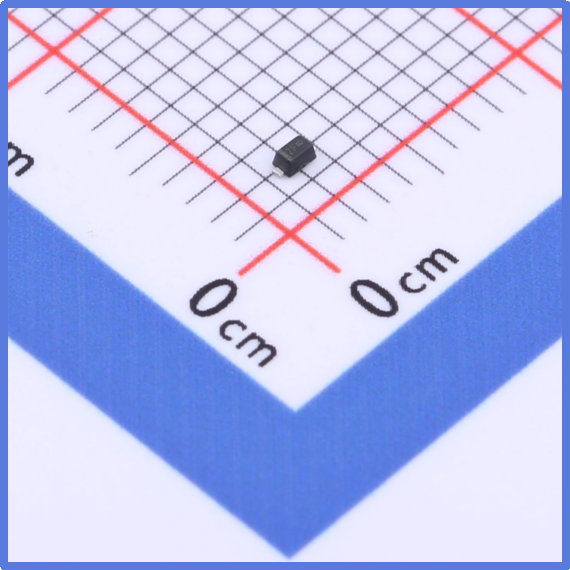
Specifically designed for portable and wearable electronics, the SLESD5Z5V0 delivers powerful ESD protection in an ultra-compact SOD-523 package (only 1.2×0.8 mm). Every parameter has been carefully optimized to meet the demanding performance and power requirements of modern smart health devices:
- VRWM = 5V (Reverse Working Voltage): Perfectly compatible with the 3.3V/5V power architectures common in medical wearables, maintaining a high-impedance state under normal operation to ensure stable, noise-free signal transmission.
- VBR(min) = 6.2V (Breakdown Voltage): Activates instantly once the ESD voltage exceeds 6.2V, clamping harmful surges while filtering out minor power-line fluctuations. This design ensures both precision and safety in sensitive analog circuits.
- VC = 11.6V (Clamping Voltage): Under IEC 61000–4–2 contact discharge tests (±8kV), transient voltages are tightly limited to within 11.6V — well below the tolerance thresholds (12–15V) of most MCU or sensor ICs — providing strong, stable protection.
- CJ = 80pF (Junction Capacitance): Balanced capacitance ensures outstanding signal integrity. In ECG monitoring systems, this translates to less than 0.2 dB signal loss across 0.1–100Hz, keeping physiological data accurate and undistorted.
- IR = 0.08μA (Reverse Leakage Current): With an ultra-low leakage at 5V operation, annual energy loss is under 0.007 mWh, making it virtually invisible to battery-powered devices — ideal for wearables requiring ultra-long standby times.
Compact, efficient, and highly reliable, the SLESD5Z5V0 is tailor-made for the next generation of smart health and medical-grade electronics.

3. Typical Application Scenarios in Smart Health Devices
- Biosensor Protection:
In photoplethysmography (PPG) sensor circuits, the SLESD5Z5V0 is connected in parallel between the sensor pins and ground to instantly discharge static buildup. Its sub-1ns response time effectively suppresses ESD-induced electromagnetic interference (EMI), ensuring heart rate and oxygen saturation readings remain stable and accurate even in high-static environments. - Wireless Charging Interface Protection:
For wireless charging coil feedlines, the SLESD5Z5V0 is implemented within a π-type filter network. Beyond ESD suppression, its 80pF capacitance and inductive pairing form a low-pass filter that reduces high-frequency noise during charging, improving system efficiency and overall charging reliability. - Touch Interface Protection:
In capacitive touchscreens and control circuits, the SLESD5Z5V0 safeguards the I/O ports of touch controller ICs from ESD strikes. It prevents electrostatic surges from damaging the touch sensor matrix or back-feeding high voltages into the MCU, ensuring seamless and accurate user interaction.
4. Conclusion: The Future of “Invisible Guardians”
As smart health devices evolve toward medical-grade precision and multi-sensor fusion, the demand for advanced ESD protection will continue to rise. The SLESD5Z5V0 exemplifies the new generation of protection technology — miniaturized, low-capacitance, and highly integrated — setting a benchmark for next-gen health electronics.
Looking ahead, collaboration between ESD protection designers and health-device SoC manufacturers will likely lead to adaptive threshold protection and intelligent fault-diagnosis capabilities, ushering in a new era of circuit-level safety.
Every time a user straps on a smartwatch or powers a home health monitor, the SLESD5Z5V0 quietly stands guard — neutralizing invisible static threats and ensuring that innovation in health technology continues to operate safely, reliably, and seamlessly.
About Slkor:
Slkor is an emerging global semiconductor company with R&D centers in Busan (South Korea), Beijing, and Suzhou (China), and a fully integrated production chain covering wafer fabrication, packaging, and testing within China. The company operates an advanced product performance and reliability laboratory and a central logistics hub at its headquarters in Shenzhen, ensuring rapid development, testing, and delivery across markets.
With over 100 invention patents, 2,000+ product models, and a customer base exceeding 10,000 worldwide, Slkor has established a strong international presence — exporting to Europe, the Americas, Southeast Asia, and the Middle East.
Driven by a culture of innovation, quality, and efficiency, Slkor has become one of the fastest-growing semiconductor brands in recent years. Its streamlined management systems and commitment to standardized service have significantly elevated the global recognition of the “SLKOR” brand.
Slkor’s product portfolio covers three core categories — diodes, transistors, and power devices — while actively expanding into sensors, Hall elements, analog ICs, and RISC-V microcontrollers, further broadening its role in powering the next generation of smart electronics and industrial innovation.


Comments
Post a Comment