Protect Without Compromise: Slkor SLPESDMC2FD5VB Ultra-Low 0.25pF TVS for 5V High-Speed Lines
As next-generation serial interfaces such as USB 3.2 Gen 2×2, DisplayPort 2.1, and 16 Gbps SerDes push single-ended data rates beyond 20 Gb/s, even a 0.3 pF ESD device can become a hidden bottleneck — adding parasitics that slow signal edges and compromise eye margins. Slkor’s unidirectional TVS diode SLPESDMC2FD5VB addresses this challenge with a typical junction capacitance of just 0.25 pF, delivering truly “zero-added-load” ESD protection for high-speed designs.
Engineered for 5 V high-speed single-ended and differential lines, the device features a 13 V clamping voltage, 5 V reverse working voltage (VRWM), and 6 V minimum breakdown voltage (VBR) — ensuring robust transient suppression without sacrificing signal integrity. With an ultra-low 100 nA reverse leakage, the SLPESDMC2FD5VB also helps mobile and wearable devices extend standby time, making it an ideal choice for performance-driven, power-sensitive applications.
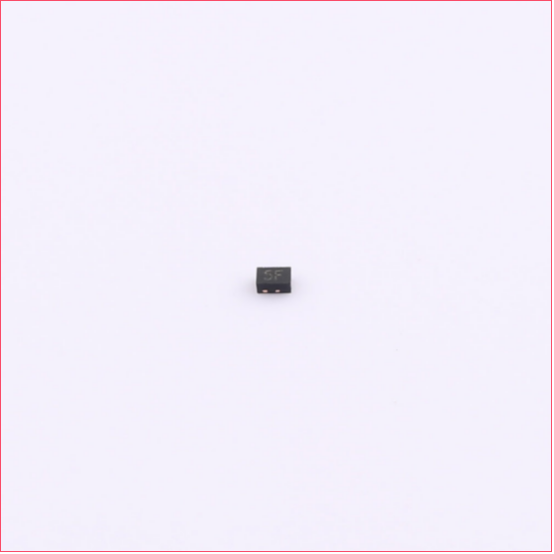
Mission: intercept ESD, CDE, or EFT pulses within nanoseconds — before they reach sensitive IC I/O — and safely shunt the energy to ground, acting as an “invisible fuse” between high-speed systems and a hostile electrical environment. Traditional protection devices often sacrifice signal integrity for higher surge capability, collapsing eye diagrams with excessive capacitance. SLPESDMC2FD5VB breaks this compromise. Leveraging Slkor’s proprietary deep-well process, it delivers 88 W peak pulse power (8/20 µs) with an ultra-low 0.25 pF capacitance, making it the ideal silent guardian for smartphones, tablets, notebooks, automotive cameras, and AR/VR headsets.
A precisely tuned protection window
Reverse working voltage VRWM = 5 V
Minimum reverse breakdown VBR = 6 V
This finely defined window ensures that normal 5 V signals remain completely undisturbed, while the device still clamps decisively under ±15 kV air and ±8 kV contact discharge (IEC 61000–4–2 Level 4), as well as 40 A, 5/50 ns EFT bursts — fully covering the protection requirements of USB-C SuperSpeed, DisplayPort AUX, PCIe sideband, and other 5 V high-speed interfaces.
13 V low clamping voltage
At 1 A, 8/20 µs, the typical clamping voltage VC is only 13 V; even at 4 A, it rises modestly to 22 V — well below the transient tolerance of modern 5 V CMOS processes. This minimizes overshoot stress and helps prevent latent gate-oxide damage, improving long-term system reliability.
0.25 pF junction capacitance — 30% lower than mainstream offerings
CJ = 0.25 pF typ (@ VR = 0 V, f = 1 MHz, max 0.4 pF)
Insertion loss < –0.15 dB and return loss < –25 dB at 20 GHz keep edges crisp and eye diagrams wide open, even beyond 10 Gbps.
100 nA ultra-low leakage
IR = 100 nA typ (@ VR = 5 V, 25 °C) and remains below 500 nA at 85 °C, helping phones, TWS earbuds, and wearables gain precious extra minutes — or hours — of standby time in always-on scenarios.
DFN1006 ultra-thin package
Measuring just 1.0 mm × 0.6 mm × 0.5 mm, it consumes 60% less PCB area than SOT-23, and its 0.5 mm profile fits effortlessly beneath a USB-C tongue. The centrally exposed die paddle provides the shortest possible ground path, reducing loop inductance and accelerating ESD discharge. Ni/Pd/Au terminals are lead-free reflow compatible, and 7-inch tape-and-reel (10k pcs) supports high-speed SMT lines.
Typical applications
• Mobile: USB-C SuperSpeed lines, headphone jacks, SIM trays, side keys, camera MIPI D-PHY/CSI-2
• Computing: Thunderbolt™ 4/5 lanes in ultra-slim notebooks, HDMI 2.1 ports, SSD M.2 slots
• Automotive: Camera FPD-Link III, GMSL links, IVI USB hubs, tuner GPIOs
• Industrial & medical: High-speed DAQ cards, machine-vision cameras, portable ultrasound probe ports
• AR/VR & wearables: AR-glass Micro-OLED links, smartwatch combo charge/data ports
Design Tips
Place the SLPESDMC2FD5VB within 2 mm of the connector ingress. Maintain symmetry and controlled impedance for single-ended or differential traces. Open a solid ground plane window directly beneath the exposed pad and avoid sharing long ground return paths to maximize discharge speed.
In addition, Slkor’s website (www.slkoric.com) offers a broad portfolio of complementary protection and power devices, giving designers greater flexibility in system-level optimization.
With its 0.25 pF ultra-low capacitance, 13 V precision clamping, tightly controlled 5 V / 6 V protection window, and 100 nA leakage, SLPESDMC2FD5VB sets a new benchmark for “invisible” ESD protection on 5 V high-speed single-ended and differential interfaces — delivering silent, uncompromising protection for lighter, faster, and more reliable end products.
About Slkor:
SLKOR, headquartered in Shenzhen, China, is a fast-growing national high-tech enterprise specializing in power semiconductors. With R&D centers in Beijing and Suzhou, its core technical team is rooted in Tsinghua University, bringing strong academic depth and industrial execution together. As a recognized innovator in silicon carbide (SiC) power devices, SLKOR’s products are widely deployed across new energy vehicles, photovoltaic power systems, industrial IoT, and consumer electronics, delivering mission-critical semiconductor solutions to over 10,000 customers worldwide.
SLKOR ships more than 2 billion units annually, with its SiC MOSFETs and 5th-generation ultrafast recovery SBD diodes setting industry benchmarks for efficiency and thermal stability. The company holds 100+ invention patents and offers 2,000+ product models, continuously expanding its intellectual property portfolio across power devices, sensors, and power management ICs. Certified to ISO 9001, EU RoHS/REACH, and CP65, SLKOR demonstrates a long-term commitment to technological innovation, lean manufacturing, and sustainable development, positioning itself as a trusted global partner in the power semiconductor ecosystem.


Comments
Post a Comment