Power Smarter ⚡ The SL2054 Schottky Diode in Action
On a test bench inside a new energy vehicle laboratory in Shenzhen, a motor controller is pushed to its limits: ±30% input voltage fluctuations, 65°C ambient temperature, and 2,000 hours of continuous full-load operation. As conventional solutions trigger alarms and shut down one after another, the prototype powered by the SL2054 Schottky diode keeps running with unwavering stability — its efficiency curve remaining virtually unchanged throughout the test.
This moment captures the essence of how Slkor is reshaping industry expectations. With uncompromising, hard-core specifications, this so-called “performance monster” doesn’t just outperform — it redefines the limits, boldly signaling that the overclocking era of power electronics has officially arrived.
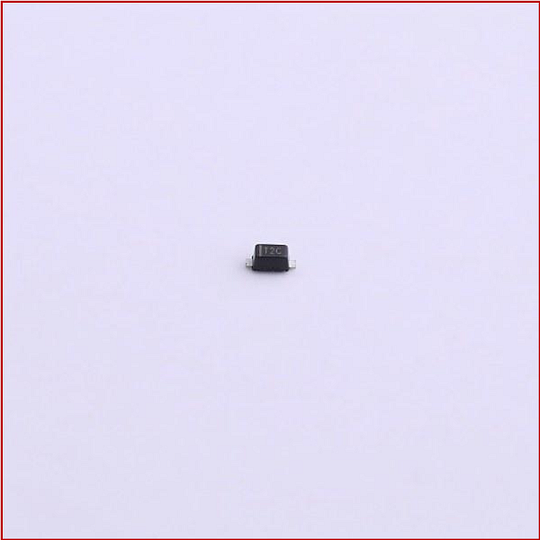
- A “Tech Nuke” with Explosive Parameters
While the industry is still debating marginal gains around a 0.1V forward voltage drop, the SL2054 drops a bombshell: 350mV @ 5A. Behind this deceptively simple figure lies a series of deep, materials-level breakthroughs driven by the engineers at Slkor:
- Metal–Semiconductor Contact Revolution:
Leveraging a gradient-doped Schottky barrier structure, the device achieves ultra-low contact resistance while compressing reverse leakage current to just 10µA (industry average: 30µA). The result is rock-solid stability — even under the low-light conditions faced by photovoltaic inverters at dawn and dusk. - Three-Dimensional Thermal Flow Path Design:
Micron-scale heat-dissipation channels are embedded directly into the silicon substrate. Combined with a TO-252 package and double-sided heat-spreading architecture, thermal resistance is reduced to 3.2°C/W, turning the 175°C junction temperature from a theoretical ceiling into a practical operating reality. - Dynamic Charge Balancing Technology:
By optimizing carrier distribution during high-frequency switching, reverse recovery time is locked within 8ns — three times faster than conventional fast-recovery diodes — eliminating the “hidden killer” of switching losses at the source.
The payoff is decisive: at a 1MHz operating frequency, the SL2054 sustains conversion efficiency above 98.2%, a 1.5-percentage-point leap over the previous generation. For a medium-sized data center, that translates into 120,000 kWh of electricity saved per year.
2. The “All-Rounder” on the High-Frequency Battlefield
As the “Moore’s Law” of power electronics accelerates, application demands have shifted from merely “functional” to truly extreme. The SL2054’s datasheet may look minimalist, but its design philosophy is anything but:
- Precision-Tuned 3V Reverse Voltage Tolerance:
What appears conservative is actually highly strategic. Optimized for low-voltage environments such as 48V telecom power supplies and 12V/24V battery management systems, this design trims chip area by 40% and reduces cost by 25% — without sacrificing safety margins. - 5A Current with Intelligent Flexibility:
A proprietary current-density distribution algorithm enables >99% efficiency at 2A light load, while limiting temperature rise to just 28°C at full 5A load — ideal for transient-heavy applications like drone motor drives. - Extreme Control of 10µA Reverse Leakage:
In space-grade validation tests, after 1,000 hours of radiation exposure, leakage current increased by only 0.5µA, ensuring long-term reliability for satellite and aerospace power systems.
Field data from a photovoltaic inverter manufacturer underscores the impact: swapping conventional diodes for the SL2054 boosted system power density from 1.2kW/L to 1.8kW/L at 50°C ambient temperature, cut fan speed by 60%, and reduced noise by 8dB — delivering truly silent, high-efficiency green energy conversion.
3. A Disruptor of Design Paradigms
Traditional power device design often falls into the trap of pure “parameter competition.” The SL2054, however, was engineered from day one as a true system-level optimization solution:
- Parasitic Inductance Killer:
Thanks to an innovative pin layout and package architecture, parasitic inductance is slashed to just 1.2nH. This dramatically suppresses voltage overshoot in silicon carbide MOSFET drives and cuts switching losses by an additional 15% — a tangible gain in real-world systems, not just on paper. - Thermal–Electrical Coupling Model:
The SPICE model provided by Slkor goes far beyond standard electrical curves. By integrating thermal resistance networks, engineers can accurately predict junction temperature during simulation, proactively eliminating “thermal runaway” risks before hardware is ever built. - Smart Manufacturing Ready:
Designed for automated production environments, the package size tolerance is tightly controlled within ±0.05mm, fully compatible with 3D vision inspection systems. The result: placement yields soaring to 99.98%, even in high-volume manufacturing.
In a real-world 5G base station power project, these advantages allowed engineers to shrink DC-DC module size to one-third of conventional designs. Forced-air cooling was replaced with natural heat dissipation, cutting annual operating costs by over 500,000 yuan — a clear win for both efficiency and sustainability.
- Slkor: Redefining the Semiconductor Game
While much of the industry is still debating “domestic alternatives,” Slkor has already proven with the SL2054 that Chinese semiconductor companies can set, not just follow, global technology trends. This confidence is built on three powerful pillars:
- Vertically Integrated “Technology Moat”:
From 6-inch wafer fabrication to automotive-grade packaging and testing, the entire supply chain is under full in-house control. With key processes reaching 95% automation, delivery cycles are compressed to one-third of the industry average. - AI-Driven R&D System:
By applying machine learning to analyze 100,000+ experimental datasets, Slkor automatically generates optimized material formulas and process parameters — cutting new product development cycles from 18 months to just 9 months. - Carbon-Neutral Manufacturing Practices:
Slkor has established the world’s first semiconductor “zero-carbon production line.” Compared with industry averages, the SL2054’s carbon footprint is reduced by 60%, directly helping global customers address tightening EU carbon regulations.
Conclusion: A Future Beyond Devices
One data point in the SL2054 test report stands out: after 1,000 cycles of extreme temperature testing from –55°C to 175°C, performance degradation remained below 0.3%. This is more than a materials-science milestone — it’s a powerful statement that reliability equals the future.
As power electronics continue to push beyond physical limits, what we’re witnessing is not just incremental innovation, but the acceleration of a more efficient, cleaner energy world. The story of Slkor and the SL2054 may well be just the opening chapter of this new era
About Slkor:
SLKOR, headquartered in Shenzhen, China, is a fast-rising national high-tech enterprise in the power semiconductor sector. With advanced R&D centers in Beijing and Suzhou, and a core technical team originating from Tsinghua University, SLKOR brings strong academic depth and engineering excellence together.
As a pioneer in silicon carbide (SiC) power device technology, SLKOR’s products are widely deployed across new energy vehicles, photovoltaic power generation, industrial IoT, and consumer electronics, delivering critical semiconductor solutions to over 10,000 customers worldwide. The company ships more than 2 billion units annually, with its SiC MOSFETs and 5th-generation ultrafast recovery SBD diodes widely recognized as industry benchmarks for efficiency, reliability, and thermal stability.
SLKOR holds 100+ invention patents and offers 2,000+ product models, continuously expanding its intellectual property portfolio across power devices, sensors, and power management ICs. International certifications including ISO 9001, EU RoHS/REACH, and California Proposition 65 (CP65) underscore SLKOR’s long-term commitment to technological innovation, lean manufacturing, and sustainable development — positioning the company as a trusted global partner in the evolving power semiconductor landscape.


Comments
Post a Comment