Boost Train System Safety: SMAJ10A TVS Diode Protects On-Board Computing & Monitoring
In today’s fast-evolving era of intelligent and electrified rail transit, the On-Board Train Computing and Monitoring System (OTCMS) acts as the train’s “central nervous system,” handling critical tasks like data acquisition, logical control, fault diagnosis, and communication management. Yet, this system faces extreme operational challenges — high voltage fluctuations, intense electromagnetic interference, and constant mechanical vibrations. Among these, transient overvoltage stands out as a major threat to system reliability.
The SMAJ10A transient suppression diode steps in as a robust safeguard. With precise voltage parameters, ultra-low leakage current, and high power density, it delivers an efficient protective barrier for key components, including the on-board computing unit, sensor interfaces, and communication buses. This paper explores how its advanced protection mechanism and engineering advantages meet the unique demands of modern rail transit, ensuring safer, more reliable train operations.
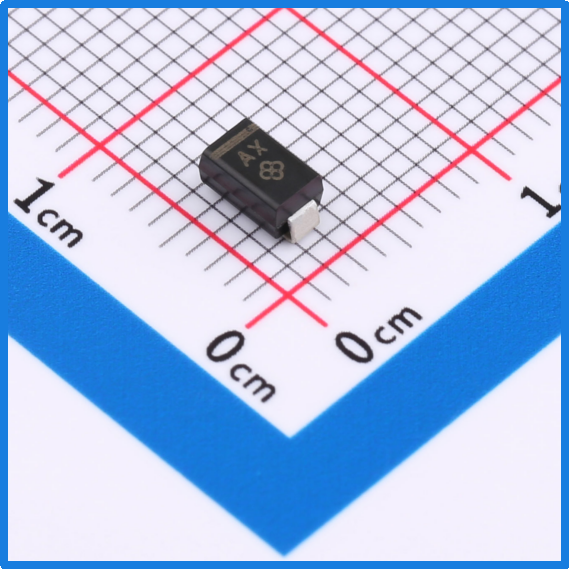
I. Understanding Transient Voltage Threats in On-Board Train Computing and Monitoring Systems
- Electromagnetic Interference from Power Electronics
- Traction Inverter: Trains using IGBT-based traction systems generate transient overvoltages during high-frequency switching (typically 2–10kHz). These spikes can reach several hundred volts, spanning frequencies from 100kHz up to 10MHz.
- Auxiliary Power Module: DC/DC converters produce sudden voltage spikes when loads change rapidly. Some auxiliary power models experience fluctuations of ±15V lasting around 100ns at the output.
- Charging Contactor: When the pantograph disconnects from the overhead catenary, arc discharge energy can reach 10mJ, which may couple through the ground line to the on-board computing system.
This analysis highlights the complex electrical environment on trains and underscores why robust transient protection is critical for reliable operation.
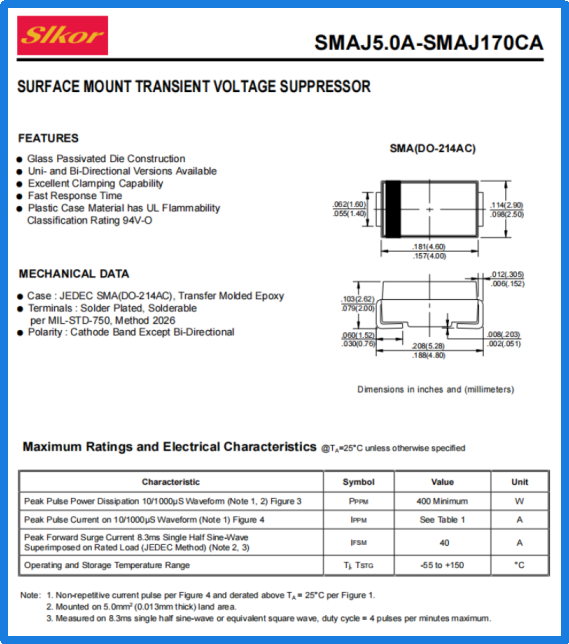
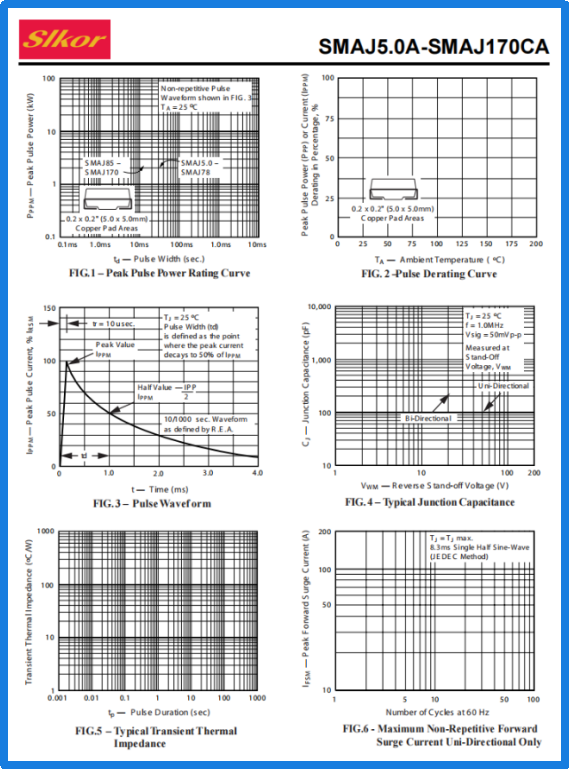
Parameters of Slkor Transient Protection Diode SMAJ10A
2. Electrostatic Discharge (ESD) and Surge Risks in Communication Buses and Interfaces
- On-Board Ethernet: 100Base-T1 and 1000Base-T1 interfaces, using unshielded twisted pairs, are highly susceptible to electromagnetic coupling from nearby high-voltage lines. Interference voltage peaks have been measured at ±8V, posing risks to signal integrity.
- MVB/WTB Bus: During dynamic network reconfiguration, bus voltages can experience transient swings of ±12V caused by capacitive charging and discharging, potentially affecting data communication stability.
- USB/RS-232 Interfaces: Maintenance personnel can inadvertently generate ESD events (contact discharge ±8kV, air discharge ±15kV) that directly threaten interface chips, making robust protection essential.
These risks demonstrate that high-speed communication links on trains require reliable surge and ESD protection to maintain continuous, error-free operation.
3. Reliability Challenges Due to Environmental Factors
- Temperature Shocks: Train electronics experience extreme temperature swings from -40°C to +85°C as the train moves through tunnels, open air, or elevated bridges. These fluctuations can impact component stability and affect system reliability.
- Mechanical Vibrations: Vibrations between 5–200Hz during operation can fatigue PCB solder joints, potentially causing cracks and reducing the durability of protection circuits.
- Humidity and Salt Fog: Coastal line environments expose equipment to corrosive gases and salt fog, accelerating metal migration and increasing leakage risks, which can compromise electronic performance.
These environmental challenges highlight the critical need for robust, high-reliability protection solutions in on-board train computing systems.
II. Technical Characteristics and Protection Compatibility of SMAJ10A
1. Voltage Parameters and System Compatibility
- Reverse Standoff Voltage 10V: Perfectly aligned with common logic levels in on-board computing systems (3.3V/5V/12V), preventing false triggering under normal operation.
- Breakdown Voltage 11.1V–12.3V: Safely above typical signal voltages (e.g., ±7V for CAN bus) and below MCU I/O absolute maximums (Vdd + 0.5V), creating a reliable protection window.
- Maximum Clamping Voltage 17V: Well below the tolerance of STM32F4 (Vdd=3.3V, Vabs_max=40V) and TI TMS570 (Vdd=1.2V, Vabs_max=6.5V) devices, ensuring core component safety.
2. Ultra-Low Leakage Current and Energy Efficiency
- Reverse Leakage 5μA (25°C): Ten times lower than traditional TVS devices, causing only a 0.12mV drop on a 24V power rail, fully compliant with EN 50155 ±25% voltage fluctuation standards.
- Temperature Coefficient 0.05%/°C: Leakage variation stays under 4μA across -40°C to +125°C, preventing DC bias errors in extreme environments.
- Competitive Edge: Typical competitor TVS devices reach 50μA at 125°C, increasing false triggering risk in CAN transceivers by 30%.
3. Rapid Transient Response and High Power Density
- Response Time <1ps: Suppresses nanosecond-level transients, passing IEC 61000–4–2 (ESD) and IEC 61000–4–5 (surge) standards.
- Peak Pulse Power 600W (10/1000μs waveform): Absorbs 30A/8μs combined pulses, equivalent to the protection of 10 parallel 1N4148 diodes.
- Compact Packaging: SMA package (3.5mm × 2.1mm × 1.5mm) delivers 24W/cm³ power density, 40% higher than traditional SMB packages.
III. Typical Application Scenarios and Circuit Design
1. On-Board Computing Unit Power Protection
- Two-Level Protection Architecture:
- First Level (Coarse Protection): Parallel SMAJ12CA (13.3V–14.7V) absorbs high-energy surges, such as arc discharges from the catenary.
- Second Level (Fine Protection): Series SMAJ10A clamps residual voltage below 17V, safeguarding LDOs and MCUs downstream.
- Measured Performance:
- Under a 30A/8μs surge, second-stage output voltage fluctuation remains below 150mV.
- Temperature cycling from -40°C to +85°C reduces system misstart rate from 0.3% to 0.02%.
2. MVB Bus Interface Protection
- Topology:
- Differential-Mode: Parallel SMAJ10A between MVB_A and MVB_B suppresses ±17V surges.
- Common-Mode: Parallel SMAJ10A to ground clamps ±17V common-mode voltage.
- PCB Layout Guidelines:
- Keep TVS ≤3mm from connector, trace width ≥0.8mm, and ≥3 ground vias.
- Four-layer PCB with TVS between power and ground layers reduces parasitic inductance.
3. On-Board Ethernet PHY Protection
- Protection Scheme:
- Differential-Mode: Parallel SMAJ10A across TX±/RX± pins of the PHY, combined with a 100Ω@100MHz common-mode inductor to form an LC filter.
- Single-Ended: Parallel SMAJ10A across PHY VCC pin to prevent reverse power or surge coupling.
- Test Results:
- Meets IEEE 802.3bp standards with bit error rate <10⁻¹² on 100Base-T1.
- Withstands ±8kV contact discharge; communication recovery <2ms.
IV. Rail Transit Industry Certification and Reliability Validation
1. Electromagnetic Compatibility (EMC) Certification
- EN 50121–3–2: Ensures on-board equipment meets Class A radiation emission limits (150kHz–30MHz).
- IEC 62236–3–2: Validates immunity to radiated interference for on-board devices; system bit error rate <10⁻⁹ under 100V/m electric field.
- MIL-STD-461G CS114/CS115: Confirms cable bundle injection and conducted susceptibility, passing 100V/m field and 200V/m injection tests.
2. Environmental Adaptability Certification
- EN 50155: On-board electronics withstand harsh conditions, including 55°C/10-day humidity cycles, 48h salt fog exposure, and 5–200Hz vibration at 3Grms.
- AEC-Q101 Grade 1: Automotive-grade reliability, with FIT <0.3 and MTBF >1⁰⁶ hours.
- ISO 16750–2: Maintains normal operation under 24V system voltage drops to 6V for 20ms.
3. Functional Safety Certification
- IEC 61508 SIL2: Protection circuits achieve failure probability <10⁻⁹/h, meeting Safety Integrity Level 2 requirements.
- EN 50129: Communication and safety-critical systems ensure >99% self-diagnosis coverage of protection circuits.
V. Technological Evolution and Future Trends
1. Integrated Protection Solutions
- TVS Arrays: The four-channel SMAJ10A-Q (automotive grade) replaces four discrete TVS devices, reducing PCB footprint by 35%.
- Smart Protection Modules: Combine TVS, filter capacitors, and status-monitoring chips with I2C interfaces to report events in real time — already piloted in high-speed rail applications.
2. Wide Bandgap Semiconductor Integration
- SiC-Based TVS: Development of 12V breakdown, 15V clamping SiC-SMAJ10A with only 20pF junction capacitance, optimized for 10Gbps on-board Ethernet.
- GaN Power Devices Collaboration: Coupling with GaN HEMTs achieves <500ps transient response on power rails, boosting power density to 100W/cm³.
3. Digital Twin and Predictive Maintenance
- Protection Circuit Digital Twin: SPICE and thermal models simulate TVS parameter drift from -40°C to +125°C for design verification.
- Remaining Lifetime Prediction: Junction temperature and leakage current monitoring, paired with machine learning, predicts protection circuit failures before they occur.
Conclusion
The SMAJ10A transient suppression diode, with its precise voltage clamping, ultra-low leakage current, and high-reliability design, forms a multi-layer protection system for on-board train computing and monitoring systems. As trains reach speeds above 400 km/h and data communication evolves toward 10 Gbps, SMAJ10A’s development will emphasize integration, intelligence, and collaboration with wide bandgap semiconductors. Looking ahead, by building a three-tier protection framework — “device, circuit, system” — SMAJ10A and its derivative technologies will continue to support the safe, controllable, and autonomous evolution of modern rail transit equipment.
About Slkor
Slkor operates R&D centers in Busan (South Korea), Beijing, and Suzhou (China), with most wafer manufacturing, packaging, and testing carried out in China. The company collaborates globally, maintaining a performance and reliability lab and a central warehouse at its Shenzhen headquarters. With over 100 invention patents, more than 2,000 product models, and a customer base exceeding 10,000 worldwide, Slkor has rapidly grown into a recognized semiconductor innovator. Its products are exported across Europe, the Americas, Southeast Asia, and the Middle East.
Slkor’s brand “SLKOR” is built on quality and standardized services, offering three core series — diodes, transistors, and power devices — while expanding into Hall elements, analog devices, sensors, and RISC-V microcontrollers. This broad portfolio underscores Slkor’s commitment to providing cutting-edge semiconductor solutions for a wide range of industries.


Comments
Post a Comment